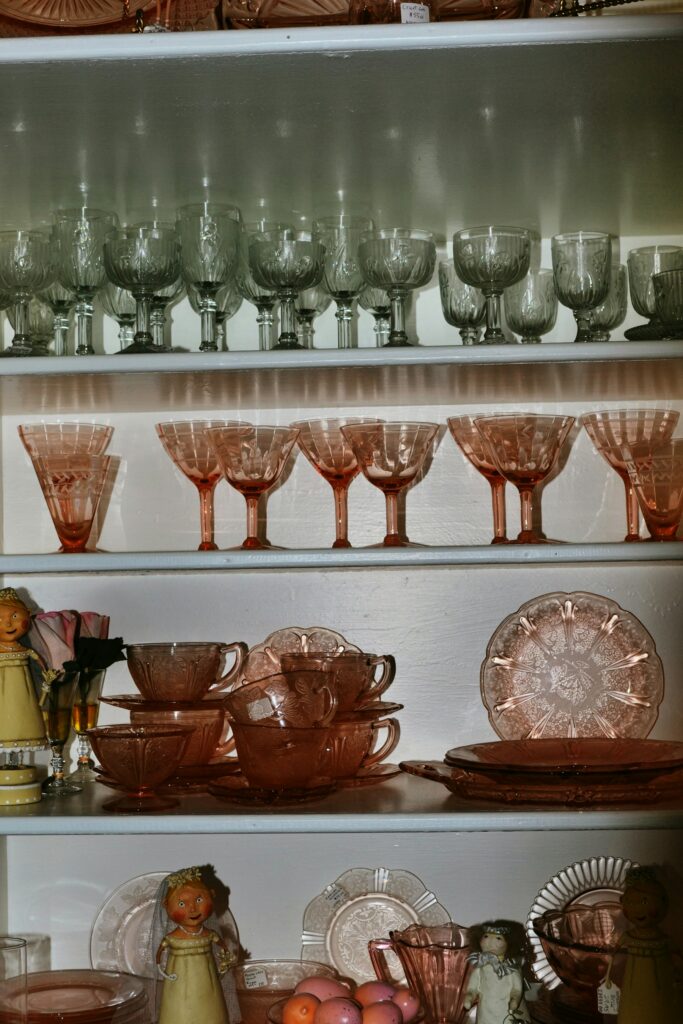
Pink plates in Grandma’s china cabinet. A green candy dish that looks almost neon. A yellow vase that seems to glow on a sunny windowsill. These are some of the most common treasures we find in Arizona estates, and they are often mixed up with each other. Here is how to tell Depression glass, uranium glass and Vaseline glass apart in a few minutes, with one inexpensive tool.
Depression glass: the colorful everyday glass of the 1920s and 1930s
Depression glass was mass-produced during the Great Depression, mostly in the 1920s and 1930s, and was cheap enough to be handed out as a store or movie-theater giveaway. The classic colors are pink, green, amber and blue, plus clear. Many pieces carry named patterns, so a plate is often part of a larger set.
- Look for small flaws. Mold seams, tiny bubbles and slight unevenness are normal. They were made fast and inexpensively.
- Check the pattern. Popular patterns have been reproduced. Compare your piece with a pattern guide; reproductions often have blurrier details or slightly “off” colors.
- Look underneath. Real age usually shows as fine scratches and a wear ring on the base where it sat on shelves for decades.
Uranium glass: the piece that glows
Uranium glass contains a small amount of uranium oxide, which gives it a yellow-to-green color. Under ultraviolet light it glows a bright, unmistakable green. It was especially popular in the late 1800s and early 1900s.
Vaseline glass is a type of uranium glass with a pale yellow-green, slightly oily look. That is where the name comes from. In short, Vaseline glass is usually uranium glass, but not all uranium glass is Vaseline glass.
The one tool you need: a UV flashlight
A small UV (blacklight) flashlight costs about ten dollars and settles most questions in seconds. Take it into a dark room and shine it on the glass:
- Bright green glow: uranium glass, including Vaseline glass and some green Depression glass.
- No glow: most pink, amber, blue and clear Depression glass.
That overlap matters. A green Depression-era dish can contain uranium, so the UV test is the only easy way to tell.
Is uranium glass safe?
The amount of uranium is small, and collectors generally treat it as safe to own and display. If you are unsure, use it as a decorative piece rather than for food.
What makes it valuable?
Pattern, color, rarity and condition drive price. Single common pieces are usually modest. Complete sets, rare colors and pieces with no chips sell best. Run a fingertip gently around every rim to feel for chips before you price anything.
From Blue Leaf
Have a cabinet full of colored glass?
We sell estates and collections across Arizona through live and online auctions. Every piece is photographed, cataloged and sold item by item to the highest bidders. Call 602-758-0865 for a free consultation, or browse our online auctions.